Monday, 4 July 2016

Day 7 – July 3: Parks, Monuments…and Pinball in Budapest

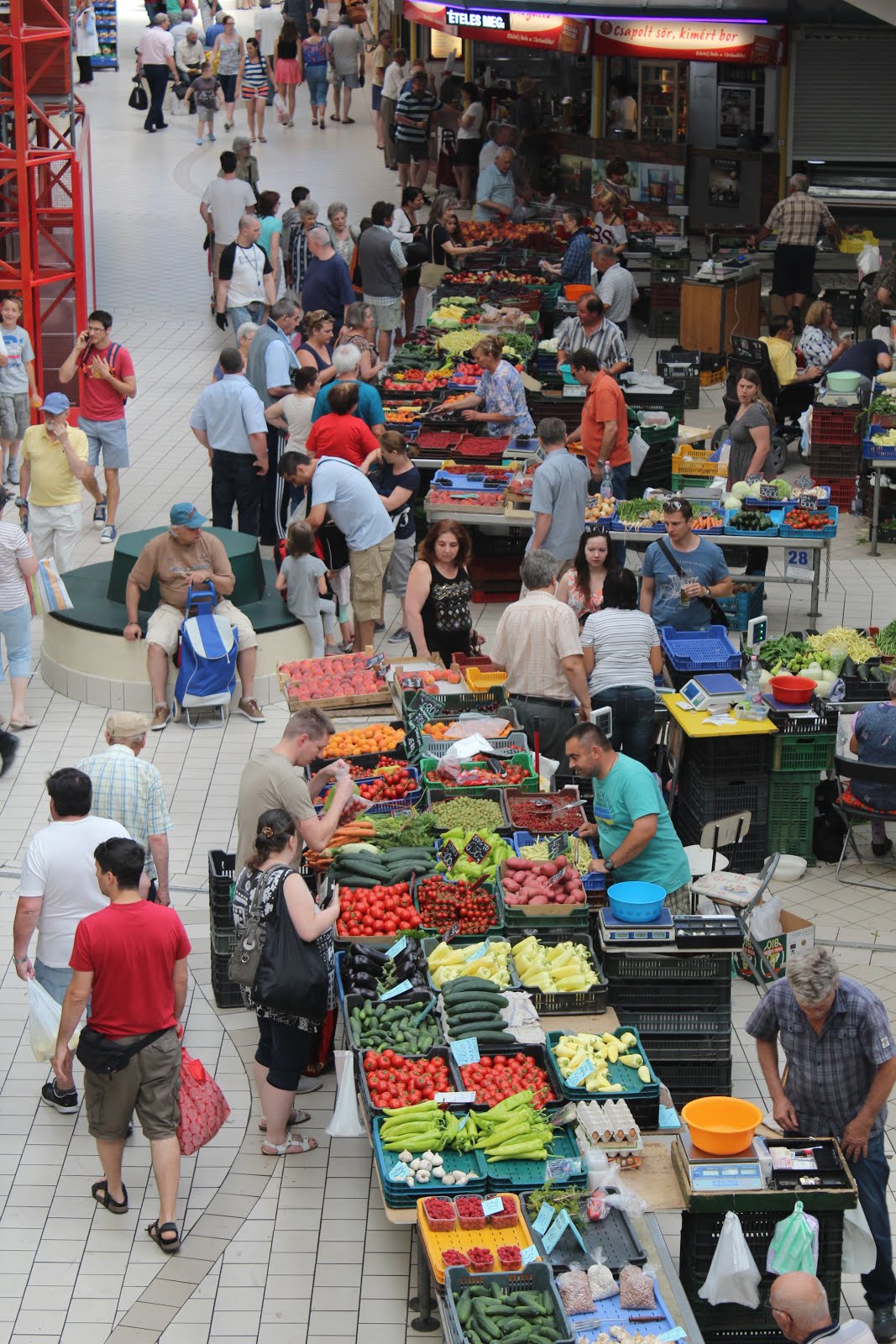
We planned some destinations today that we knew would be open on a Sunday but we hadn’t anticipated it being difficult to find breakfast in our neighborhood. Thankfully one of the things Rachel wanted to do in Budapest was go to the markets and as the Grand Market is closed on Sundays we chose one described as the “liveliest” because it was 1) open and 2) close to our apartment.  And we were able to cobble together a breakfast of yogurt, fruit, and baked goods.  It was not at all a tourist attraction so we mostly had to point at what we wanted to try.  Jim thought wisely to be the one to bite into the croissant with the unidentified filling first, and discovered it was stuffed with a hot dog! 

From the market we walked up to Heros’ Square, which was alive with celebration – singing, dancing, drums, men with whips, etc.  A woman explained to us that they were holding the first-ever celebration of an important war that kept Hungary intact many years ago but for some reason wasn’t properly given its due in Hungarian history.  In addition to enjoying the festivities we were still able to appreciate the Millennium Monument and sculptures in the square. 


From there we walked a little ways down “Parade Street” – an area once used for Communist Parades – to see two very cool monuments.  In fact, the 1956 Monument might be my favorite of all monuments I’ve ever visited.  It stands were a giant Stalin statue once was and symbolizing the way Hungarians came together in the uprising – first scattered individuals (rusty) gradually coming closer and closer together, gaining strength in their unity.  The other monument we saw was a great idea, just not as well executed. It is a year-long giant hourglass that is supposed to be rotated 180 degrees at the start of each year. Unfortunately, the sand got clogged in the hourglass despite best efforts to keep out the condensation.  


As we returned to Heros’ Square we walked through a little food festival and tried two local specialties.  Budapest does have a version of the bread wrapped around the pole and cooked over an open flame –  kurtoskalacs or chimney cake - they just don’t fill theirs with ice cream (which seems such an obvious oversight to me I haven’t been compelled to buy it yet…but of course wouldn’t leave without trying it).  It was cooked to perfection, crispy outside and bready inside…only thing that could have made it better would have been some ice cream!  We also tried tocsni which is essentially a huge potato latke that they spread with a sour cream like sauce and sprinkled with cheese.  

We returned to Heros’ Square and walked behind into City Park, site of the 1896 Millennium Exhibition celebrating 1000 years of Hungary.  Hungry really had a great time celebrating that 1,000 birthday – the year 1896 (and the number 96) are really important here.  The huge replica of a Transylvanian castle, Vajdahunyad Castle, originally built of temporary materials for the celebration, was so loved by the people that they insisted it be rebuilt it in brick and stone.  It, like many things in Budapest it seems to me, is an appreciation of several different architectural styles.

Renaissance Castle with Romeo and Gothic gate


Baroque Mansion housing agriculture museum, hence statue with rake

Romenesque Benedictine Chapel

Statue of Anonymous - it was hard to make out the face!


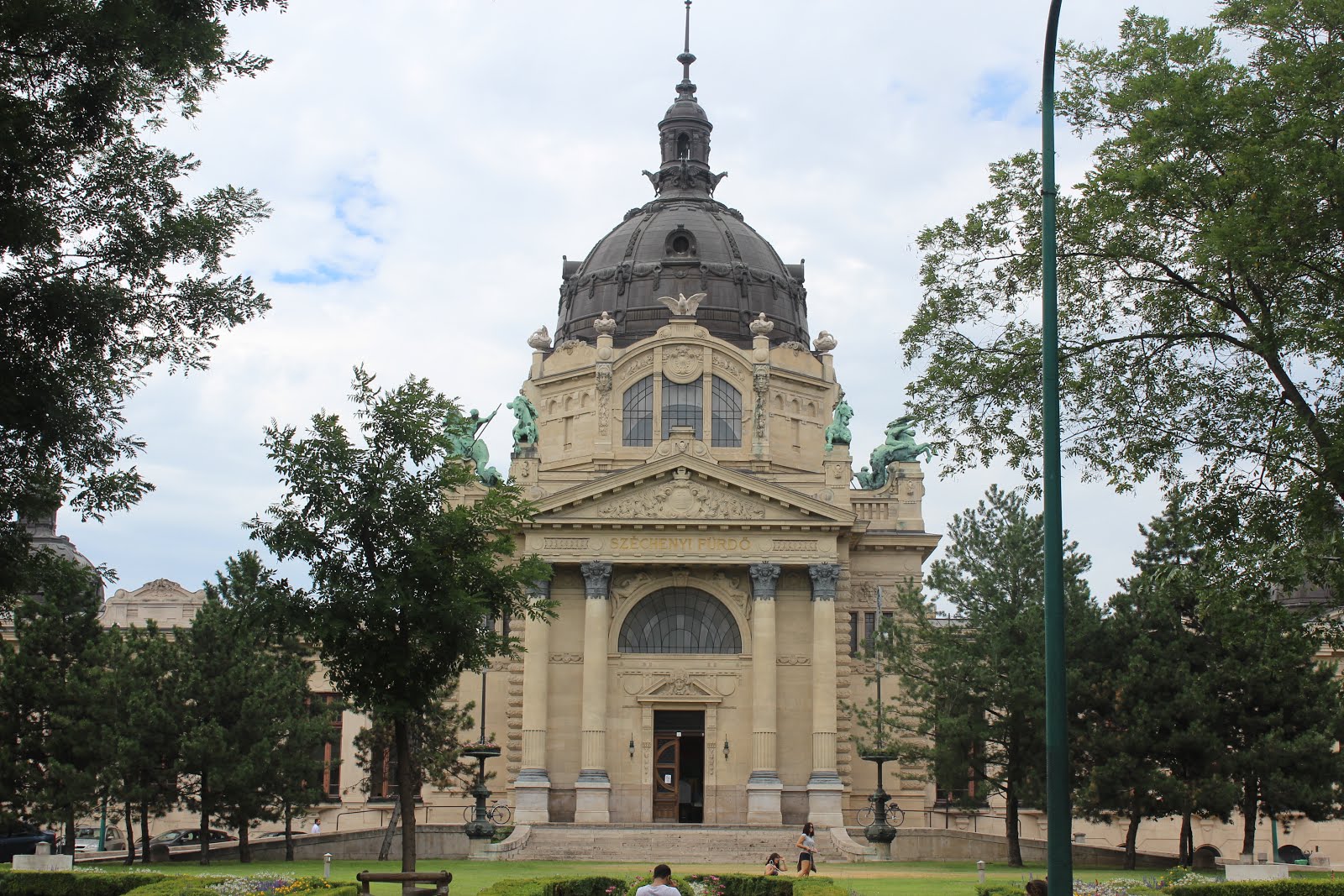
On the other side of the park are the Szechenyi Baths.  Jim had really wanted to spend some times in the baths of Budapest, and the experience was highly recommended by many.  Unfortunately the one thing the hip doctor said Jim couldn’t do for a year was get in a hot tub.  The baths seemed an obvious extension to that rule.  But we at least got to the see the beautiful building!


We hopped on the metro to head to our House of Parliament tours and stopped along the way to see some of the other nearby sights in Leopold Town.  We went into St. Istvan’s Basilica (again part of the 1896 construction) and was surprised to find that it is St. Istvan over the alter, not Jesus!  

We also saw Liberty Square, the Soviet War Memorial, and a monument to the local hero Imre Nagy who was the head of the 1956 Uprising and executed because of it.  He is seen as an anti-communist hero but interestingly was actually a life-long communist.
Jim, Imre Nagy, Julia and Rachel keep their eyes on Parliament

From there it was time for our tours of the House of Parliament.  Julia decided she wanted to take the tour in Spanish just for fun and practice and that tour started 30 minutes before the English one the rest of us took. We could have spent that time in the museum there but we instead purchased our first souvenir – a pack of cards of Hungary and played some Rummy.  When it was our turn to go in Rachel had to surrender her Swiss Army knife to the Hungarian guard (which she later got back).  The tour was interesting.  The huge building was built entirely symmetrical because they had two houses of government, an upper and a lower, that would operate at the same time on opposite sides of the building.  In 1945 with the communists it changed to a single house and so now one side is used for official business and the other is for tour groups.  And, it sounds like they gave us the more decorated side.  It is lavish inside, decorated with more than 84 pounds of gold.   We weren’t allowed to take pictures of the guarded Hungaraian Crown, kept under the massive dome (which is 96 meters high – nothing is allowed to be taller in the city).


Grand Staircase = 96 steps

It was much cooler today than yesterday – 11 degrees in one day – a much welcome relief.  By the time our tours ended it was actually getting a little chilly!  We were excited to go back to the apartment to change into long sleeves that we had worried we had brought over by would never need.  I was really feeling the need to eat some goulash while in Budapest so we found a Hungarian restaurant a few blocks from us.  The girls were able to find a few things they could order – Rachel had an amazing fruit soup (peach). I got beef goulash with dumplings; at least I can say I did that!

 Around the corner from our apartment is a place called the Flipper Muzeum – a basement full of over 100 working pinball machines.  You pay an entrance fee and play as many games for as long as you want for free. We got there at 8:45 and, luckily, they closed at 10:00 – that gave us plenty of time to play and it would have been really hard to get Jim to leave if the guy hadn’t been turning off the machines all around us.  A super fun way to spend our last night in Budapest!


Sunday, 3 July 2016

Day 6 – July 2: House of Terror and Castle Hill

 The first order of business today was to do something about the fact that Jim was without anything to wear except for the clothes he traveled in for 24 hours (and none of us wanted that).  Besides, the heat would be a killer if he stayed in jeans while waiting for his luggage to be found and delivered.  We walked a few blocks for breakfast near the mall and, while Julia guided Jim back to our hostel for a shower, Rachel and I went to the GAP to get him shorts and a t-shirt.  While food has been relatively inexpensive on this trip, clothes were just as pricey if not more so.

Once we got that settled, we headed to the House of Terror, a recommendation high on Tina and Andrew’s list. The building served as the headquarters for both the Nazis and the Communists during the “double occupation” of Hungary.  No photos were allowed inside, but it was an excellent museum of the terrors that came with this long and recent part of Hungary’s history.  Though Hungary sided with Germany in order to avoid war, the Nazi-affiliated Arrow Cross Party forcibly took control in 1944 and immediately started killing Jews, many right in this building. Shortly thereafter, the Red Army invaded and in a devastating siege took Budapest in February 1945.  The Soviets didn’t leave Hungary until 1991 and during that time this building was the headquarters of their secret police, who by the time they were done had “imprisioned, abused, or murdered one person from every third Hungarian family.”  Particularly powerful was the wall of the victimizers, many of whom are still living.  I was around 20 years old when this all finally ended here – which means that people my age grew up in a totally different world than they are living in now. 

There is a lot to take in at the House of Terror and we could have spent even longer than we did, but it was after 2 and we needed to move on to lunch and our next stop, Castle Hill.  Rachel had read about some restaurants she really wanted to try and so we went to one that was in the right direction, CafĂ© Kor. We got a table, but when the waiter read us the specials from the board it was one meat dish after another.  We decided to try instead another of her picks – the highest rated Indian restaurant in Budapest.  But, by the time we arrived it was 3:00 and they were closing for the afternoon; we made a reservation to come back for dinner instead.  We ended up a little cranky and hungry (or at least I was) at an delicious Italian place on the street leading up to the Basilica. 

After being set right by food, we walked over the Chain Bridge, the first permanent bridge to span the Danube and part of the great unification of Pest and Buda.  It was built in the 1840s and rebuilt after the Nazis destroyed it during the war.  


We took the funicular up to the Palace which was once one of the greatest Renaissance palaces in the world, but is now a post-WWII recreation of a combination of several past versions and with some new add-ons like the great green dome.  

 It did provide some great views of the Pest side.  Most interesting to me was the topographical differences on the sides of the river.  Buda is on what is considered one of the last foothills of the Alps but immediately across the river in Pest everything is totally flat, beginning the great plains section that leads to Asia, making the Danube the perfect natural border for Europe to some.  By the time we headed inside to the Hungarian National Gallery we learned it was only going to be open for 30 minutes longer, so we skipped it and the History Museum and continued along Rick Steve’s walking tour of the area.   (So happy Jim brought that book with him – we’d missed traveling with Rick.) 


We learned that the hill we were on was actually full of miles of natural caves used by people in the area for centuries for different reasons.  Jim is not one to miss a cave, so when we got to Matthias Church we took a detour to see the Hospital in the Rock – a secret military hospital and nuclear bunker. 


We arrived at the secret entrance just in time for the last English tour of the day at 6:00 pm .  Again, no photos were allowed inside but we enjoyed walking through the caves-turned-hospital (the decrease in temperature alone was welcome relief).  They have done an excellent job of displaying the hospital as it was with many still working machines and wax figures (a little creepy but really made the viewing more vivid) in every room.  I think more museums should go this route.


We went back up the Matthias Church and hopped on the bus (going in the wrong direction to start but figured out our mistake quickly).  We returned to the Indian Restaurant and had a great meal (though we’d rate our neighborhood place higher) followed by a lovely walk on the Danube as the sun was setting and the lights turned on. 


It was 10 pm by the time we got back to the hostel and we just assumed Jim’s bag would be waiting…but it still hadn’t been delivered.  We watched the second half of the Germany vs. Italy Euro 2016 game and by the time the PKs were finished, the bag had arrived.  It was the first 20,000+ step outing on the new hip and Jim seemed to do just fine – though the other one will probably suffer more from this trip.  Sadly, the new hip will keep us out of the baths – one of the places Jim really wanted to go.

Friday, 1 July 2016

Day 5 - July 1: The Buda Hills

Julia woke early for a run through the streets of Budapest, getting only a little lost, and woke Rachel and I when she returned.  As Jim was scheduled to arrive this afternoon for the start of his part of this vacation, our main objective today was to see parts of Budapest that wouldn’t conflict with things he’d likely want to see with us, which cut out any of the major attractions in town.  Instead, we decided to get out into the hills on the Buda side and get a view of the city from above.  And getting there was a large part of the adventure.  We set out with very little guidance—our map didn’t even cover where we were going, all we had was a little post-in written by the hostel owner (Agnes) with some key names of where we wanted to go.  But we were grateful to have that helpful little piece of paper at almost every turn.  

Tram
We started off walking to the tram which we which we took to its end.  We then had a short walk to the start of the Cog Railway, built in 1874, which (once we located it) slowly took us up further into the hills, nearly 4 km in 14 minutes.  Between the tram and the railway it started to rain; our umbrellas safe and sound back at the hostel, Rachel went into a store to get a plastic bag to cover the camera and came out with a banana which for some reason Julia carried with her the rest of the day.  It became a sort of science experiment to watch it ripen as we walked. We assured her we would eat soon so she should keep carrying it. 

Cog Railway
The Children's Railway
 The Cog Railway  dropped us another short walk from the Children’s Railway, built in 1951 by Pioneers (socialist Scouts) and entirely staffed by school children aged 10-14.  The child labor was cute, but also honestly a little creepy especially when they saluted as the train took off. 
 We chose to take the Children’s Railway only one stop (instead of the guide book recommended four) because I’d remembered reading that was the best place to grab lunch along the route (though I didn’t quite remember where).  I’m not sure I found the “right” place but we did have a yummy lunch.  Agnes had told us from there it was a nice and easy hike through the woods to a chairlift that we could take down to enjoy wonderful views of the city.  But that is where the directions got a little fuzzy.  We asked at lunch and our waiter was pretty clear that we couldn’t take any path through the woods, that we needed to follow the street for 20 minutes and we would get there, but we were sure the woods would get us there since Agnes told us so.  So, while there were many paths near the woods we somehow concluded she meant the meant the woods right next to the train tracks so we headed back over the tracks and into the woods.  There were so many “trails” heading different directions.  I have no idea why we thought we had it right, and soon knew for sure we had it totally wrong.  But, like good explorers we didn’t turn back but just kept straight ahead.  Eventually we came to a street and felt confident we could get back to something familiar.  We eventually got back close to where we had begun and are pretty sure we actually found the start of the path that Agnes intended us to be on. 
There were all sorts of markings on the trees that first gave us confidence and then made us feel like we were in the middle of a Nancy Drew video game…on a challenge we weren't passing.  Luckily we had that scrap of paper with us and we found enough Hungarians along the way to keep pointing us the in right direction.  


We went past the chairlift a little further up a rugged stepped trail to Elizabeth Tower and up 101 steps in the tower to enjoy amazing views of the city we will be exploring.  


The House of Paliament in the middle there


We returned to the chairlift and rode down the mountain, but had no plan for how to get back to the city from there. The bottom of the chairlift was crawling with people and police and other uniformed people and a line of nicely dressed people going through a security tent.  We looked more closely and saw that many of the uniforms were of the U.S. State Department so we got a little closer to find out what was happening: a 4th of July celebration at the home of the U.S. Ambassador.  I got my information from a nice Texan man who has lived in Budapest for 20 years.  Though he said no many times, I feel confident with a little more effort I could have talked my way into that party.  Instead, he very kindly pointed us to a bus stop and told us which one to take all the way back to our neighborhood.  Five modes of transportation for our little adventure!  We needed to get back to the hostel to wait for Jim’s arrival since we thought his plane had already landed, but once we got to wifi we learned that he had missed his connection in Paris and wouldn’t be arriving until after 11 pm after all. 

We finally let her throw it away
When I took my initial cash out of the ATM I got several 20,000 notes that we’ve been finding hard to get anyone to take, so we decided to head to the nearby mall to find an open bank to see if they would exchange mine for smaller bills.  We couldn’t find anyone to do that without charging a fee so we decided to see if the big cinema there had anything playing in English.  Only one was subtitled in Hungarian rather than dubbed, so we bought our tickets to see Me Before You two hours later. Feeling the need to see some part of the city center, we then raced to get to the House of Parliament before it closed at 6 pm to see if we could reserve tickets for and English tour tomorrow, something our book said must be done in person but turns out can easily (and only) done online (what you get for using an old tour book from the library).  But at least we got to see some beautiful buildings! 

House of Parliament up close

Julia’s sudden acquisition of a spot-on sense of direction has thrown our travel dynamic out of whack. I think her morning jogs on her own have helped her map out the city in her mind and so far in Budapest she is much more oriented than I am!  During our fast-paced walk we passed a place called The Shake Bar that we came back to for a dinner on the way back to the mall. We thoroughly enjoyed our movie, popcorn ($2 for a small!), and candy and walked back to our apartment (another daily total of over 21,000 steps) to await Jim’s new arrival time. 

He just walked in now as I’m writing this (around midnight) without any luggage!  (Tina, you were right!) Poor guy had to spent 8 unexpected hours in the Paris airport only to arrive to lost luggage.  Hopefully it arrives soon…we have lots of Budapest to see now that he’s finally here!


Day 4 - June 30: Prague to Budapest

At 11 pm last night we were surprised by an Italian woman (who works in Spain but was visiting Prague) entering our room to take the bunk above me.  We had really enjoyed the room to ourselves. This hostel was pretty different from last year’s – although called Hostel Mingle, we never really spoke to any other travelers.  Didn’t seem worth investing much in this new person at that time of night, though I’m sure she is lovely. So, this morning we woke early, packed in the dark as quickly and quietly as possible to get to a few sights before catching a noon train to Budapest.  On the way we wanted to grab a very quick breakfast but were drawn in by a sit-down restaurant that claimed farm to table freshness.  This is one case where the menu looked amazing but the food unfortunately didn’t deliver.  My yogurt with homemade muesli was actually inedible.

One of the many walls covered with handwritten names
High on the list of places we wanted to be sure to see before leaving Prague was Pinkas Synagogue,  described as the most powerful of the sights in the Jewish Quarter….and it is pretty clear why.  We knew going in that the names of the 77,297 Czech Jews who had been killed during the war were handwritten on the walls of the temple, but still rounding the corner and seeing the first room of names was overwhelming.  This is certainly the clearest, most personal representation of the magnitude of the devastation.  Upstairs was an art exhibit of pieces of children of Terezin – also very powerful.  
We exited through the Jewish Cemetery which is a full of tombstones engraved in Hebrew, leaning every which way.  For thousands of year it was the only place in Prague that Jews could be buried so they are 7 to 8 people deep with close to 85,000 people buried there under the 12,000 tombstones. 

After a final raspberry lemonade from a street vendor and with only a few minutes left to see Prague, we raced over the Church of St. James to see the desiccated arm, the story goes, of a man who tried to steal the Madonna Pietatis and his hand immediately froze when he touched it.  
The desiccated arm
Monks had to cut off his arm to get it to release and hung it in the church as a warning to others. The first time we passed the Church it was closed but the thought of the desiccated arm was enough to draw us (namely Rachel) back at the last minute. And, much to our surprise we walked right into Kate Gabrielson and family!  We had no idea they were even in town!

Kate Gabrielson and Family!


Then we really had to hurry to get back to the hostel, pick up our backpacks, and catch the tram to the train station.  We hit 10,000 steps on the way to the train – a busy morning!  I had reserved seats but was surprised that our car consists of little compartments of six.  We are sitting in a compartment with Veronika – an 18-year-old Slovak girl who lives in Prague but is on her way to visit her dad in Bratislava – and 2-year-old Amir with his parents from Orange, CA.  We had a lovely time chatting with them about their lives and learning a little of the experience of a teenager in Prague.  She is studying acting, dancing and singing, so we’ll keep an eye out for her in the future!


We made it to Budapest and followed our hostel owner’s careful instructions on the metro to Adventura Boutique Hostel.  We have a family apartment (The Art Apartment) on a nearby street in a residential apartment building in the northern part of the Pest side.  They let me know ahead of time that I would have to pay cash in full upon arrival but we hadn’t gotten any Hungarian Forint yet.  We dropped our bags and went to a nearby bank.  The exchange rate is 285 to $1, so even pretty cheap things have price tags in the thousands.  Mental math is definitely a challenge in Budapest.  Once settled we were in need of dinner and found that eating traditional Hungarian food wasn’t going to be any easier than it was with Czech cuisine.  Our guide book advises to live like a local: “learn to like meat.”  So, we walked to a highly reviewed Indian restaurant a few blocks from our apartment for a delicious vegetarian meal.   It is nice being in a real neighborhood and to have so much space after our small bunk bed room.

Day 3 - June 29: Terezin, the Slav Epic, and a Progressive Dinner

The big activity for today was an Andrew and Tina-recommended trip to Terezin, the Jewish Ghetto and prison 40 miles outside of Prague.  Since it was an hour each way by bus, we wanted to get a relatively early start.  We ate a quick breakfast of beautiful pastries at the little French bakery under our hotel, and found our way to the bus station.  I was feeling so proud of how we navigated the metro to the bus station as we were running up to platform 7 to hop on the bus just before the 10 am departure only to find that we were in the entirely wrong bus station (and to be informed of this mistake first by the bus driver (“Terezin?” “No, no no!”) and then by a very unfriendly ticket agent (who practically spat at me)).  The next bus left 45 minutes later from a bus station a couple of stops away on the metro. 

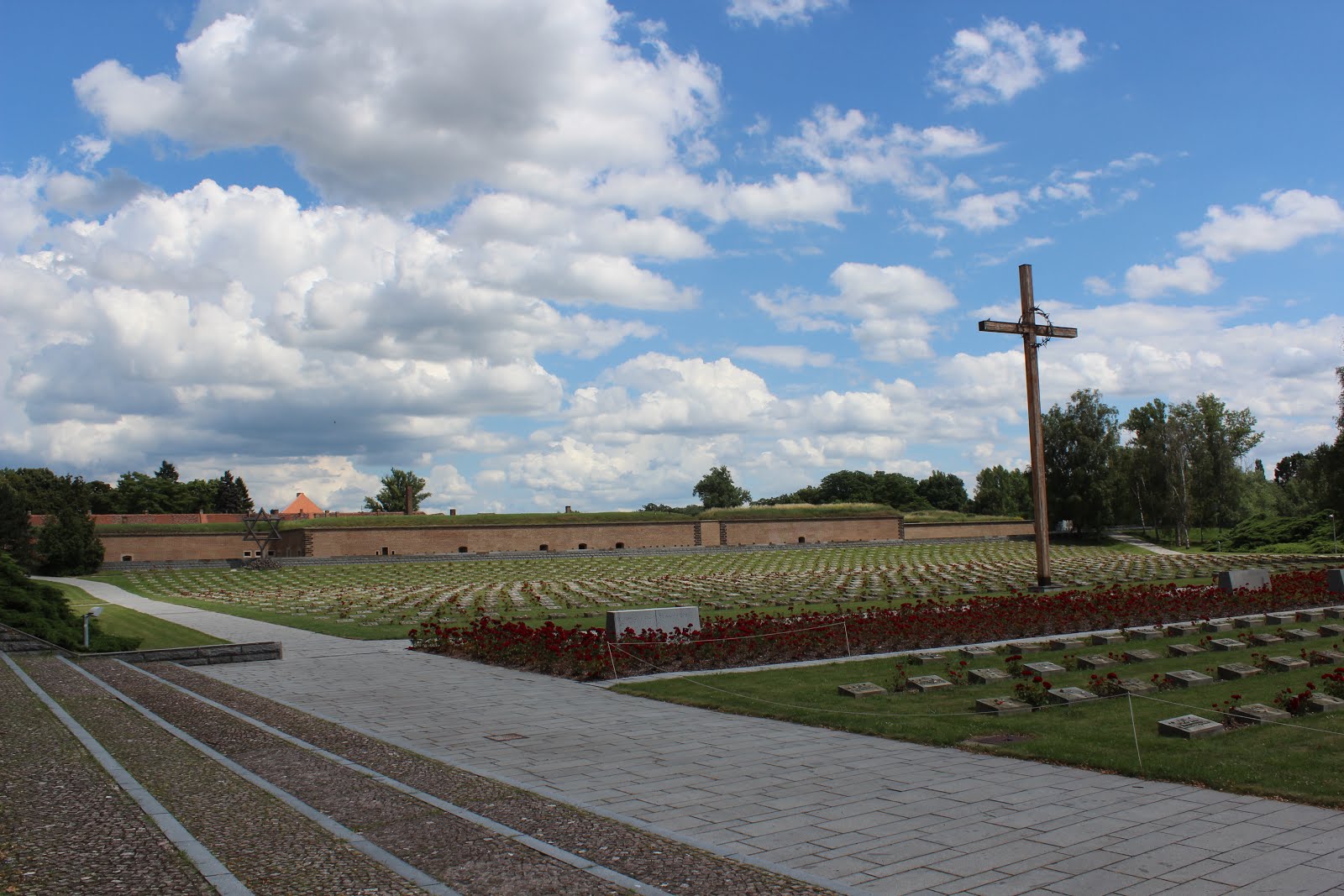
 We easily made the next bus and got to Terezin in time for an “English” tour of the Small Fortress – our guide did deliver the info in English but didn’t have enough command of the language to understand our questions.  We also learned quite a bit in their wonderfully informative museum. The Fortress, just outside of the town, was a fort for many years and turned into a Gestapo prison for political dissidents (of any religion) during the war. The majority of prisoners were not Jewish but the Jews were treated particularly harshly. It was not a concentration camp (no gas chamber) itself but more of a weigh station for Jews on the way to gas chambers in other countries.  Many people lost their lives in Terezin prison but mostly to really poor conditions, illness, and some executions. It is just hard to picture how terrifying life must have been for these prisoners and even harder to believe that anything like this happened in modern history.  On the way into the Small Fortress there is a National Cemetery which is notable for both the huge cross and Star of David towering over the tombs.


After a few hours in the Fortress, we walked the kilometer into the town of Terezin, which had been turned into a “model Jewish town” during the war for propanda purposes but was really just a pitstop for Jews on the way to death camps.  Because it started as a cute town that was evacuated to make space for Prague Jews on their way to other places, it appeared to be a lovely place where Jews were being well treated.  So, this was the site shown to the Red Cross to prove that Jews were being treated humanely during the war…but their visit that took a year to prepare for only lasted 6 hours.  
Rather than choosing between the two restaurant options in Terezin, we opted to grab some delicious yogurts from a corner market and take the next bus back to Prague, which meant we sadly missed the Museum of the Ghetto. We wanted to get back to Prague to catch one more sight before everything closed at 6:00 pm. 

We walked from the bus station (never in the best parts of a town) to the misnamed Veletrzini Palace to see the Alfons Mucha’s 20-piece masterpiece “Slav Epic”.  He attempted to capture the 1500-year history of the Slavic people in 20 huge canvases that all together are slightly larger than the size of the Sistine Chapel.  One nice thing about living in a young country is there just isn’t all that much history to know.  It seems impossible to keep track of everything that has happened in this region. 


From there we decided to walk back into the city center to get dinner.  We couldn’t decide between two restaurants – one Rick Steve’s recommendation for their vegetarian options and one a pizza place that we had stumbled upon during our walk on our first day.  Because we had an actual address for the Rick Steve’s option, we went there and sat in the lovely outdoor courtyard.  The Klub Architektu has by far the best looking menu we’ve seen in Prague; it is not a vegetarian restaurant, we highly recommend to any and all!  But, the pizza place was also calling our names, so we decided to do a progressive dinner.  We had a delicious fried goat cheese and arugula appetizer with balsamic glaze and raspberry sauce and some raspberry lemonades.  (Because we are not partaking of the traditional Czech beer and meat we became focused on ordering malinovka – a traditional raspberry soda that they call lemonade – whenever possible.) 
We then went in search of the specific courtyard that we had stumbled upon on our first day with the pizza restaurant and using a photo we had taken of a nearby flower shop as a clue, we found it pretty easily.  We ordered rigatoni arrabiatta and margherita pizza. And, then though we were tired and it was out of the way, we went in search of the perfect local dessert - trdelnik  If I’m honest, it really wasn’t as good as the first one which is probably a good thing…I got a little concerned trdelnik wouldn’t be limited to Prague and I don’t know how many of them I should eat!


We returned to our hostel and listened to the karaoke championship.  No one bats an eye when my teenagers wander into a bar.  It is super clear that Prague is a great place to be if you are twenty-something looking for some nightlife.  Those of us who aren’t just went to our room for bed.  Another full day – we walked over 10 miles!